
2023 0 comments
Most remodeling challenges don’t come from construction. They come from how the process is structured from the start. The difference between a stressful project and a supported one often comes down to who’s guiding the decisions along the way.
This guide explores the difference between traditional design-bid-build and design-build remodeling, showing how a more integrated, structured approach creates clarity, reduces friction, and leads to a more supported, predictable experience from initial planning through construction and completion.
To help you navigate the key ideas, here is a breakdown of what we will cover:
- The Traditional Path: Design-Bid-Build
- Where the Traditional Path Gets Complicated
- A Different Approach: Design-Build
- How a Structured Process Changes the Experience
- The Creekstone Approach: Bringing Clarity to Each Phase
- Frequently Asked Questions
- A More Supported Remodeling Experience
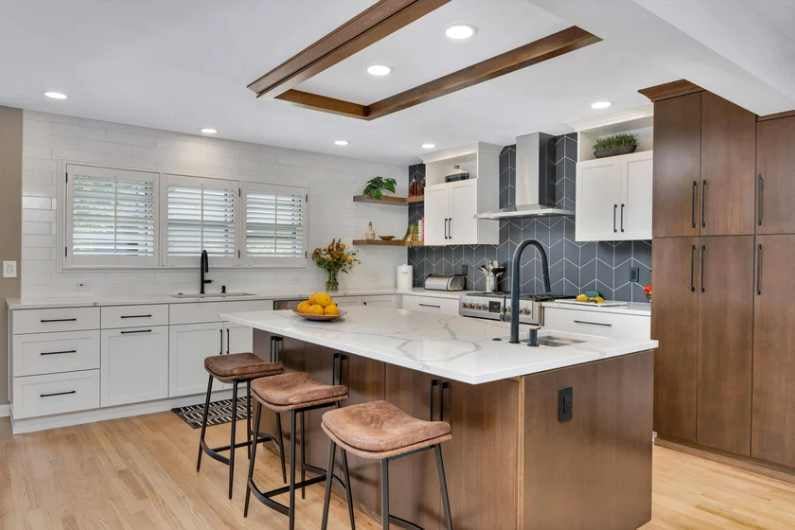
Photo: Southwest Hills Kitchen Remodel
The Traditional Path: Design-Bid-Build
Design-bid-build is the most common and widely recognized approach to remodeling. It follows a sequence that feels logical at first.
The process typically begins with hiring a designer or architect to create plans for the project. Once those plans are complete, they are sent out to contractors for bidding. After reviewing the bids, a contractor is selected, and construction begins.
Each phase is handled separately, often by different professionals who are brought in at different points along the way. While this structure can work, it also means that the design, pricing, and construction phases are not always fully aligned from the beginning.
This separation is what shapes the experience that follows.
Where the Traditional Path Gets Complicated
The design-bid-build approach is structured in a way that can introduce friction as the project moves forward.
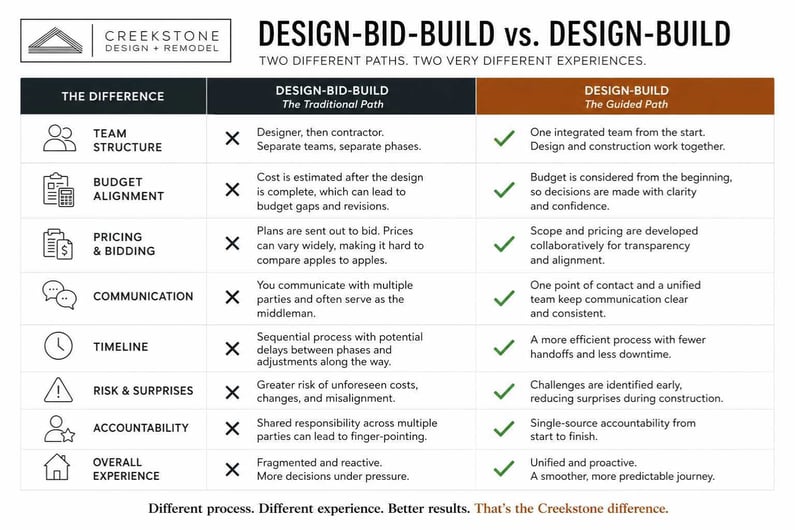
- Design is completed without input from the contractor, which can lead to budget gaps and revisions after bidding.
- Bids often vary widely, making it difficult to compare scopes and make confident decisions.
- Communication is divided between multiple parties, leaving the homeowner to bridge gaps and coordinate details.
Over time, these inefficiencies can compound. What starts as a clear plan can become reactive, with more decisions happening under pressure instead of through a structured process.

A Different Approach: Design-Build as a Guided Process
Design-build offers a different approach to remodeling by bringing design, planning, and construction into a single, coordinated process. This approach is increasingly common for homeowners planning a major remodel, such as a kitchen remodel, bathroom remodel, home additions, or basement remodel in the Portland area.
Instead of separating each phase, the same team works together from the beginning. Design decisions are made with construction insight in mind, and planning happens with a clear understanding of budget and feasibility.
This creates a more connected experience. Communication is streamlined, responsibilities are clearly defined, and there is a single point of accountability throughout the project.
Rather than navigating each phase independently, homeowners move through a structured process with guidance at each step.
How a Structured Process Changes the Experience
When design and construction are aligned from the beginning, the entire remodeling experience becomes more predictable.
- Decisions are made with a clear understanding of the budget, reducing the need for revisions later
- Planning is more thorough, allowing construction to move forward with fewer interruptions
- Communication is streamlined, with one team guiding the process instead of multiple parties
- Challenges are addressed early, shifting the experience from reactive to proactive
For Portland homeowners, this often means fewer surprises, more confidence in each decision, and a process that feels organized from start to finish.
The Creekstone Approach: Bringing Clarity to Each Phase
A structured process only works if it is carried through every phase of the project. At Creekstone, each step is designed to build on the one before it, creating a clear and connected experience from start to finish.
Initial Consultation and Education
Every project begins with a conversation focused on understanding your goals, priorities, and how you want your home to function. Just as important, we walk through what the remodeling process actually looks like so expectations are aligned from the beginning.
Design Phase
Design is approached with both creativity and practicality in mind. Our in-house team develops concepts that reflect your vision while staying grounded in real construction considerations, often using 3D modeling to help you fully visualize the space before moving forward.
Detailed Planning and Costing
Before construction begins, every detail is thoughtfully defined. This includes materials, layout decisions, and scope, allowing us to establish a fixed budget with no change orders and eliminate uncertainty moving into the build phase.
Construction Phase
With a clear plan in place, construction becomes more efficient and predictable. The project is managed by a dedicated team with consistent communication and oversight, ensuring the work aligns with the agreed-upon design and standards.
Quality Assurance and Handover
As the project nears completion, we conduct thorough quality checks and walk through the space with you to ensure everything meets expectations. This phase is about delivering not just a finished project, but a complete and refined result.
Post-Completion Support
The relationship does not end when construction is complete. We continue to be a resource for any questions or needs that come up, reinforcing our role as a long-term partner and backing our work with a 10-year warranty.
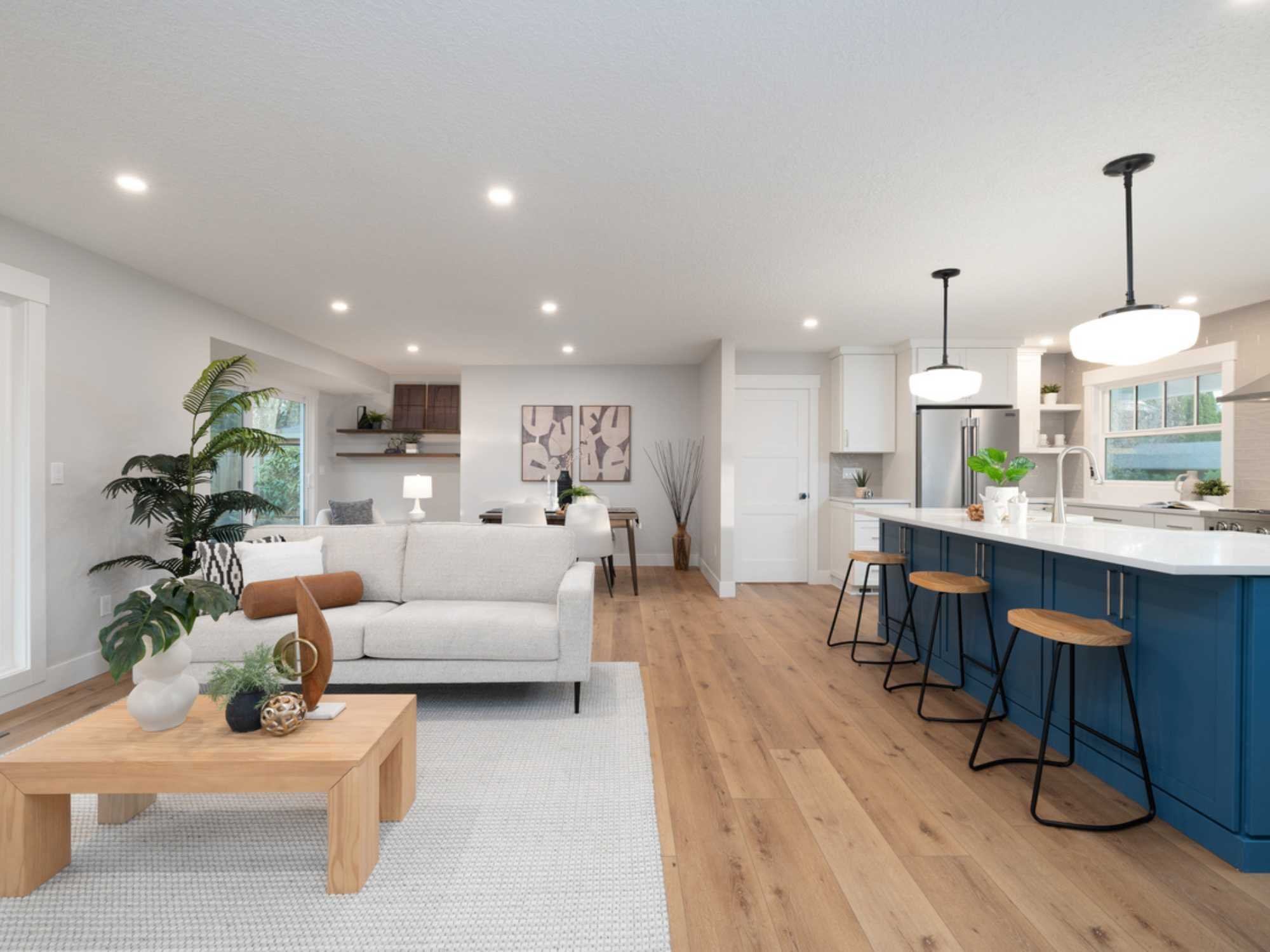
Photo: Raleigh Hills Whole Home Remodel
Frequently Asked Questions
Is a Portland design-build remodeler more expensive than traditional remodelers?
Not necessarily. While the upfront design phase is more detailed, it often leads to better cost alignment early in the process. In a traditional model, unexpected changes and revisions during construction can increase the overall cost.
A design-build approach focuses on defining the full scope and budget upfront, which can lead to a more predictable investment.
Will I know the final cost of my design-build project during the design stage?
The goal of the design phase is to bring as much clarity to cost as possible before construction begins. Through detailed planning and selections, the project scope is fully developed, allowing for a fixed price prior to construction. This reduces uncertainty and helps you move forward with confidence.
Can I make changes during the middle of a design-build remodel?
Yes, changes can be made, but the process is intentionally designed to minimize the need for them. Because decisions are made and documented upfront, most adjustments are addressed during the design phase.
Making changes during construction is still possible, but it can impact the timeline and cost depending on the scope of the revision.
What level of detail is included in the design before construction?
The design phase is highly detailed and goes beyond basic layouts. It includes material selections, layouts, and technical planning that guide the construction process. This level of detail helps ensure that what is designed is what gets built, reducing surprises and creating a smoother construction experience.
A More Supported Remodeling Experience
The path you choose shapes more than just the outcome. It defines how the entire process feels along the way.
With the right structure in place, remodeling becomes more organized, more predictable, and far less stressful. If you are looking for a clearer path forward, starting with the right approach makes all the difference.
If you are ready to explore what that could look like for your home, schedule a conversation with our team to get started.
